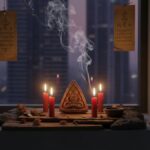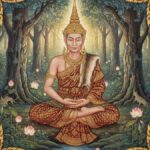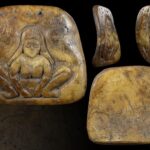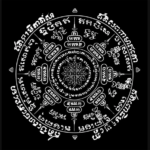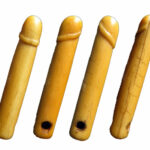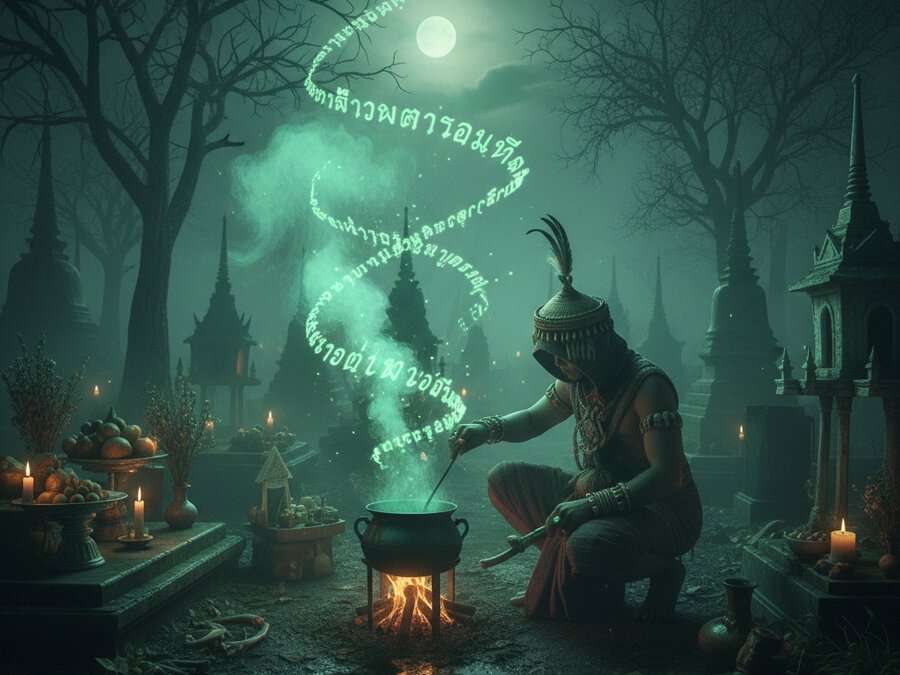
The legend of Nam Man Prai (น้ำมันพราย), a potent love potion steeped in Thai animism and necromancy, is a tale woven from dark threads. Believed by many to be an instrument of sheer black magic (Saiyasart Dum), it derives its power from the most horrifying source imaginable: the physical remains of a pregnant woman who died along with her unborn child (Tai Hong กลม).
The Anatomy of Wicha Prai (วิชาพราย)
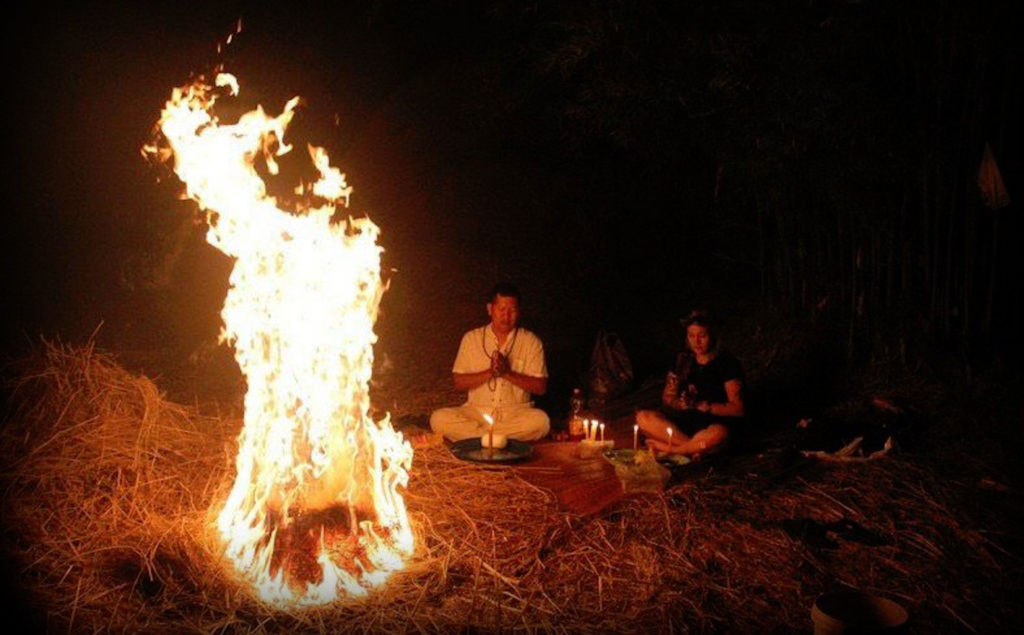
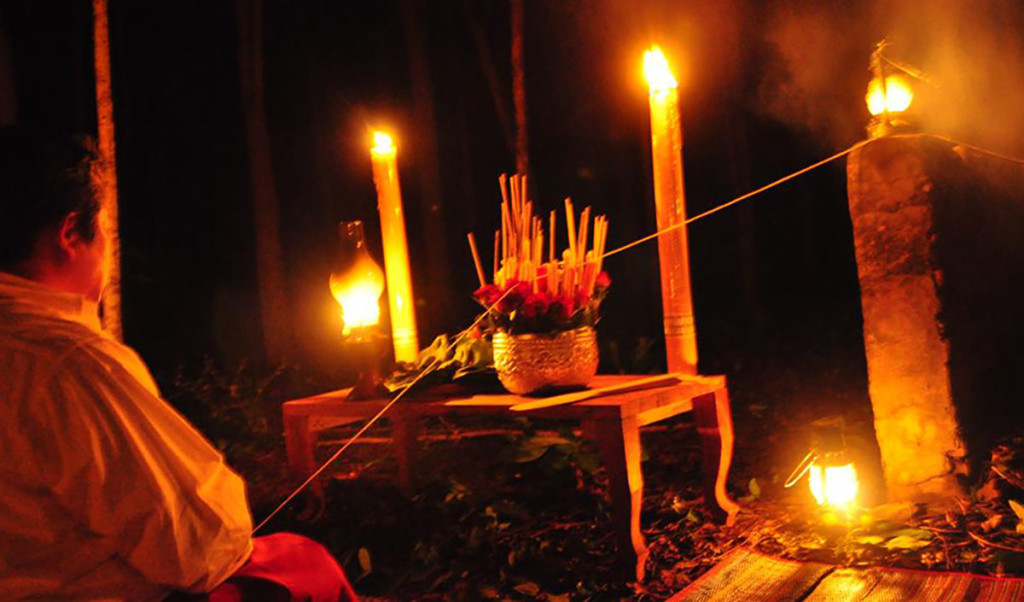
To understand the creation of this legendary elixir, one must delve into the ancient Khmer-Thai art of Wicha Prai (Necromantic Sorcery). In this tradition, a spirit requires a biological base in the physical world to exert influence. Obtaining pure Nam Man Prai is an ordeal reserved only for the most fearless and powerful magicians (Mor Pee or Arjan). The ritual involves strict karmic transactions and requires a specialized beeswax candle with a precise wick, crafted while chanting ancient Khom incantations.
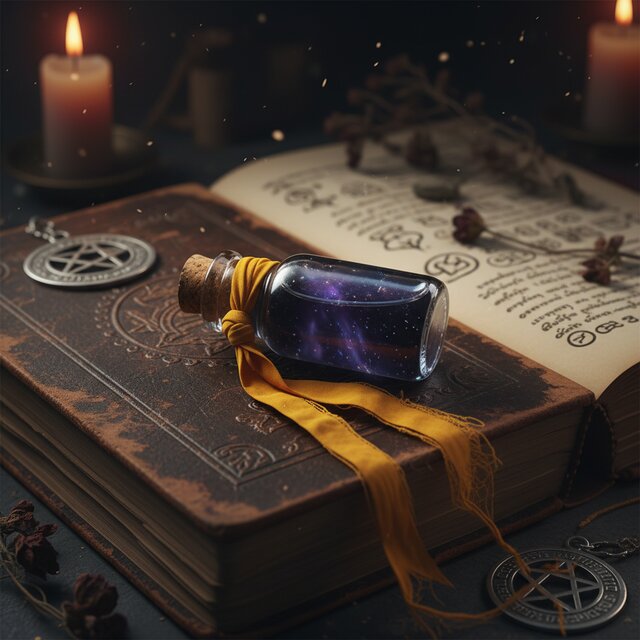
The chosen graveyard must be appeased with offerings to the guardian spirit, Nai Pha Cha. Permission is paramount, for a refusal or a mistake in the incantations could unleash a vengeful army of restless spirits upon the practitioner. The first hurdle lies in identifying the “correct” corpse—a violent death imbues the spiritual residue with immense “high-energy” Prana.
The Ritual of Extraction
The grave itself is often marked by Putsa tree thorns, a traditional deterrent against restless spirits wandering. Removing these thorns is the first physical step in the perilous journey. Next comes the task of neutralizing protective spells placed by the local undertaker (Sapparoer). Once deactivated, the earth is ceremonially opened, and the grim excavation begins.
The enraged spirit of the Phii Dtay Hong may manifest, attempting to disrupt the ritual and break free from the spellcaster. Only through unwavering focus (Tejo Kasina) and chanted mantras can the magician subdue the spirit. With the spirit subdued, a negotiation ensues. The extracted oil, often a meager ten drops, is then mixed with a potent dilution medium—a concoction of coconut oil from funeral rites.
Srang Baramee vs. Saiyasart Dum
But the potion isn’t complete yet. Coals from seven different funeral pyres fuel the boiling process. The empowered Nam Man Prai is then taken to seven different temples, placed in the direct gaze of the main Buddha image, and further empowered with chants. This distinguishes true Thai necromantic mastery (which seeks to help the spirit make merit, or Srang Baramee) from purely malevolent black magic.
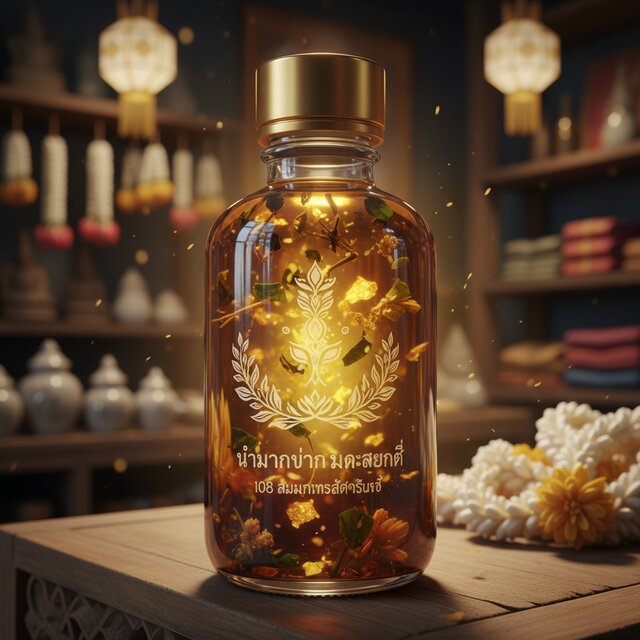
Owning Nam Man Prai is a responsibility not to be taken lightly. Daily offerings of food, sweets, and incense are mandatory to appease the spirit residing within the oil. Only those with strong minds and the controlling mantra can wield it safely. The consequences for misuse are dire.
Today, the extraction of authentic human Naman Prai is highly illegal and socially stigmatized. Because of this, modern masters shift toward “synthetic” or “herbal” substitutes (such as Wan Maha Sanaeh and Nam Man Dork Tong) that claim to mimic the vibrational frequency of the original Khmer necromancy, providing potent attraction power without the karmic dangers.
Written by Ajarn Spencer Littlewood
buddhamagic.net