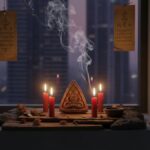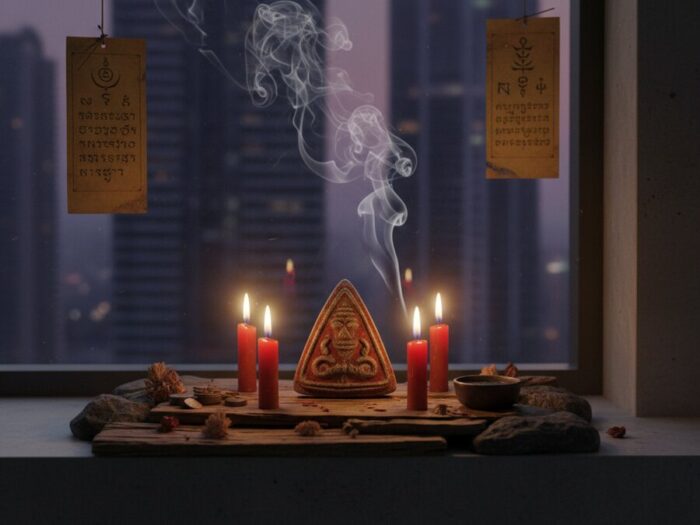
A triangular clay Phra Ngang amulet on an urban altar surrounded by red candles and incense, blending modern city shadows with dark ancient Khmer animist aesthetics

In a high-rise condominium overlooking the chaotic sprawl of Sukhumvit Road, Bangkok, an entrepreneur sits before a small, ornate altar. Amidst the scent of sandalwood and the flicker of red candles sits a small, triangular clay tablet—a Phra Ngang. We are not looking at a dying tradition; we are looking at the evolution of a dark, forgotten history that refuses to stay buried.

I. The Angkorian Blueprint: Statecraft as Sorcery

To understand the modern Thai amulet, one must first look at the ruins of Angkor. The Khmer Empire (802–1431 CE) was not merely a political entity; it was a sprawling, stone-carved ritual. The Khmer kings were Devarajas (God-Kings), but their power was anchored in something far older than Hindu imports: the Neak Ta, the territorial spirits of the soil and the ancestors who inhabited it.
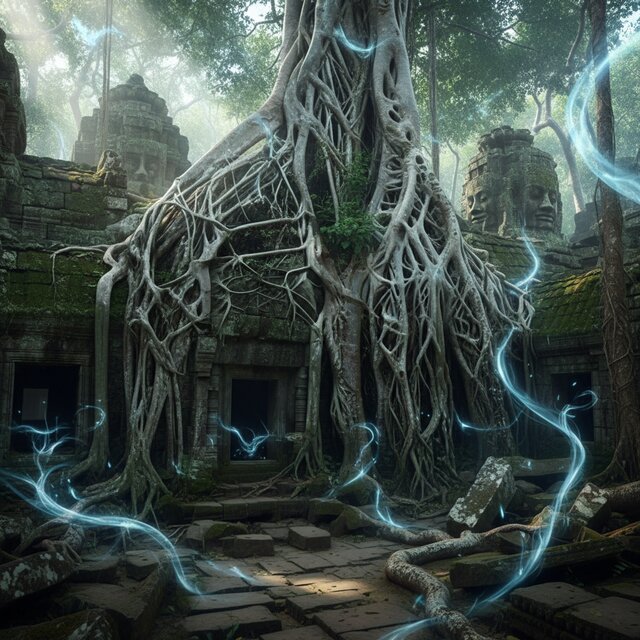
Mystical ancient ruins of Angkor overgrown with thick jungle roots
The foundations of Khmer sorcery lie deep within the ancient temples of Angkor.

The “blueprint” of Khmer necromancy was born from the necessity of binding these spirits to the service of the state. In the Angkorian worldview, the dead were not gone; they were the ultimate landowners. To build a temple or expand a kingdom, one had to negotiate with the spirits of the deceased. This led to the development of “bone-binding” techniques.

Archaeological evidence and oral traditions suggest that the foundations of Khmer temples were often “consecrated” with organic remains—not necessarily as human sacrifice in the Hollywood sense, but as a way to “anchor” a protective spirit to a specific geographic coordinate. This is the origin of the metaphysical anchor: the belief that a fragment of the physical body (bone, hair, or ash) serves as a bridge, a permanent “phone line” to the consciousness of the departed.

II. The Great Migration: From Necropolis to Forest
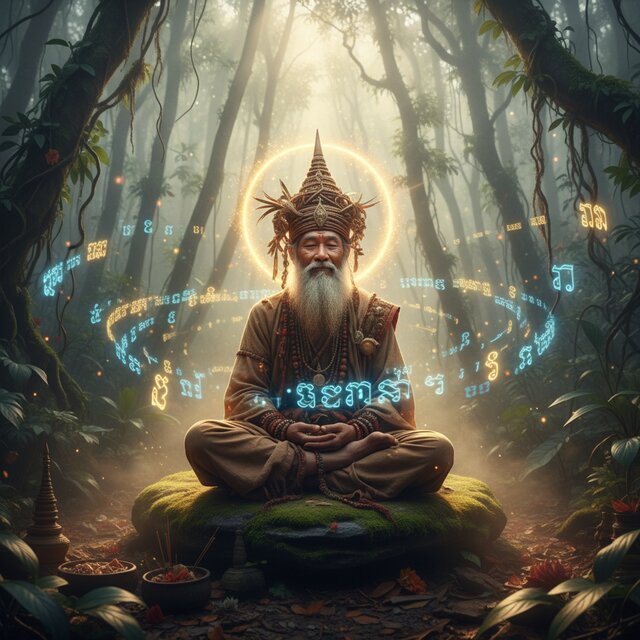
Mystical Thai Lersi hermit master meditating in a deep misty jungle with ancient Khmer script
As the Khmer Empire collapsed, master sorcerers took refuge in the thick forests, taking their ancient secrets with them.

When the Khmer Empire collapsed in the 15th century under the pressure of the rising Thai kingdoms of Sukhothai and Ayutthaya, the master sorcerers—the Arjan and the Lersi—did not simply vanish. They migrated.

As the physical capital of Angkor was reclaimed by the jungle, the “intellectual capital” of Khmer sorcery was carried into the borderlands. These masters took refuge in the thick forests of the Isan region (Northeast Thailand) and the Cardamom Mountains. Here, the raw, state-level necromancy of Angkor was “miniaturized.”

The massive stone lingams and mountain-temples were replaced by portable artifacts. The “territorial spirit” bound to a temple was now bound to a small piece of carved bone or a mixture of sacred powders. This transition was crucial. It transformed necromancy from a tool of kings into a tool of the individual. The Wicha became a hidden curriculum, passed down in the Krom (manuscripts) written in the sacred Khmer Khom script—a script that many modern Thai practitioners use today without actually speaking the Khmer language.

III. The Anatomy of Empowerment: Biological Anchors
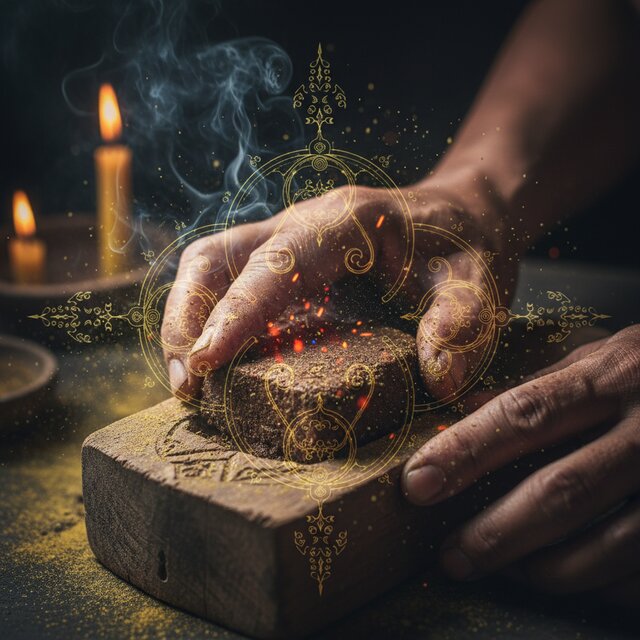
Close up of a traditional Thai amulet being molded from sacred herbal powders and embers
The modern amulet serves not merely as a symbol, but as a battery of resonant life force.

Modern Thai amulets are often classified into two categories: Phra (Buddha-based) and Kruang Rang (Occult/Animist). It is in the latter that the Khmer blueprint is most visible. The “sophisticated metaphysical tools” of the modern era rely on a specific biological component.

Anthropologically, the use of Naman Prai (corpse oil) or Phong Phrai Kuman (child ghost powder) is frequently misunderstood as “black magic” for its own sake. In reality, it is a technical requirement of the Khmer blueprint.

The theory is as follows: A spirit requires a “base” in the physical world to exert influence. Just as a radio requires an antenna to catch a signal, a metaphysical entity requires a biological resonance. Calcified remains—specifically those from individuals who died in a “high-energy” state (sudden or violent deaths, known as Tai Hong)—are believed to retain a residual “life force” or Prana.

When a modern master like the late Luang Phor Tim of Wat Lahan Rai created his famous Prai Kuman powders, he was using a refined version of the ancient Khmer technique. By processing these remains through fire and specific acidic herbs, the “raw” ghost is “refined” into a specialized servitor. The amulet is no longer just a symbol; it is a battery.

IV. The Software: Katha and the Activation of Energy
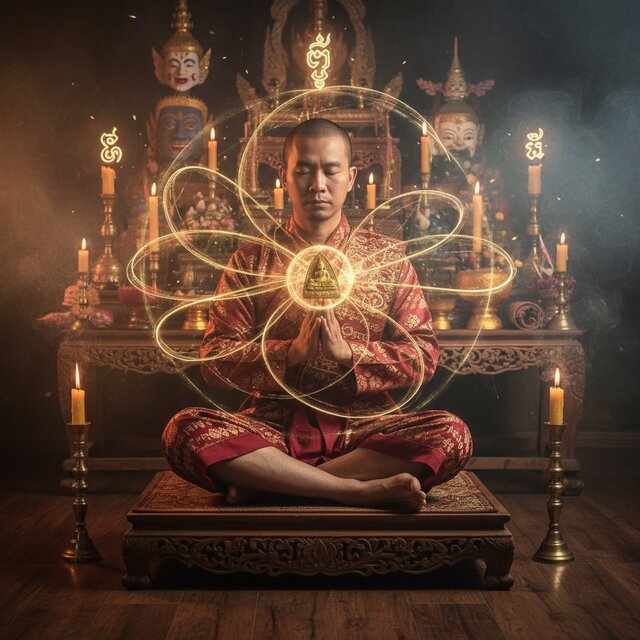
Traditional Thai sorcerer holding an amulet between palms in deep meditation with glowing ethereal energy
The Prana Pratishta or “Breath of Life” awakes the resident spirit, transforming hardware into an active consciousness.

If the amulet is the hardware and the organic remains are the battery, then the Katha (incantations) are the software.

The Katha used in Thai-Khmer rituals are often a hybrid of Pali, Sanskrit, and archaic Khmer. These are not merely prayers; they are vibrational commands. Deconstructing these chants reveals a logic of “naming and taming.”

The ritual process usually involves three stages:

1. Extraction: Calling the spirit from its place of rest.
2. Purification: Using the “Fire of Concentration” (Tejo Kasina) to strip away the spirit’s worldly trauma.
3. Binding: Using the “Golden Thread” of the Katha to lock the spirit into the physical object.

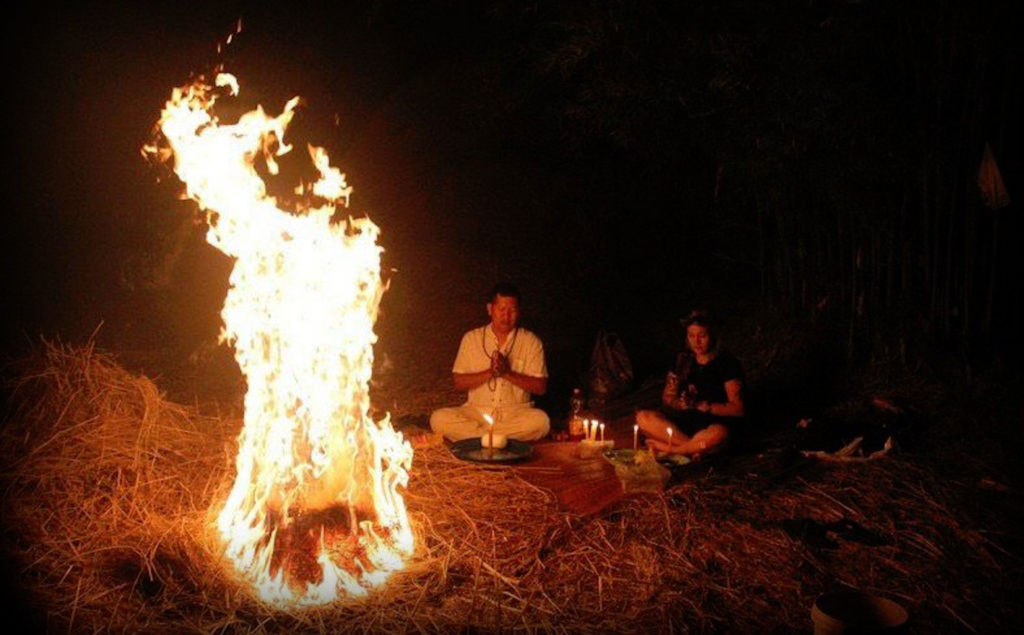
One of the most potent rituals is the “Breath of Life” (Prana Pratishta). The practitioner holds the amulet between their palms, entering a deep meditative state. They visualize their own life force flowing into the object, “waking” the resident spirit. This is the moment of activation. To the practitioner, the amulet is now “alive.” It has a pulse. It has a “mind.”

V. Case Study: The Phra Ngang

The Phra Ngang is perhaps the most iconic example of the Khmer-Thai metaphysical bridge. Often depicted as a hooded figure with red eyes and a curved topknot, the Ngang is a “trickster” deity of Khmer origin.

In ancient Cambodia, the Ngang was likely a mountain spirit or a protective warrior deity. As it moved into the Thai esoteric system, it became the ultimate “multi-tool.” Unlike the Buddhist monks who represent “high” morality, the Ngang is a “low” spirit. It is unconcerned with the Five Precepts. It is used for Maha Saney (extreme attraction), Metta Mahaniyom (popularity), and Kong Grapan (invulnerability).

The “addictive” nature of the Ngang comes from its perceived responsiveness. In Thai folk belief, the Ngang must be “fed” with offerings—liquor, cigarettes, and sometimes raw meat. This creates a symbiotic, almost transactional relationship between the human and the spirit. It is a modern manifestation of the ancient Khmer contract with the Neak Ta: “I provide you with a physical home and sustenance; you provide me with protection and prosperity.”

VI. Social Anthropology: The Market for the Miraculous
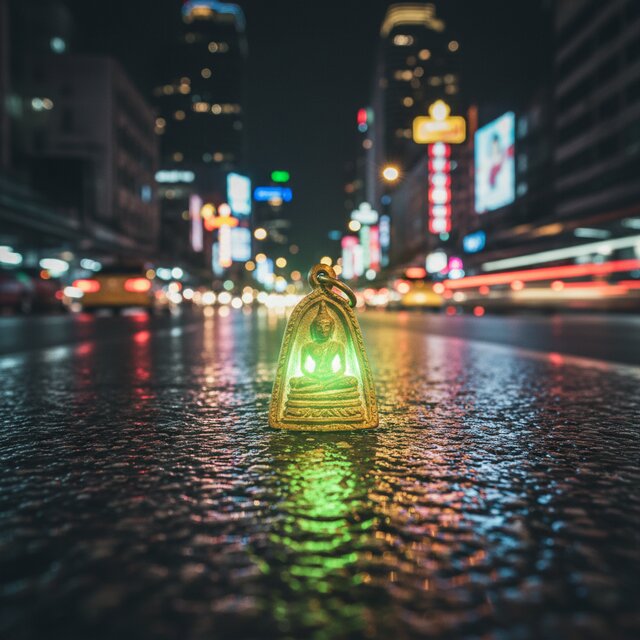
Glowing traditional Thai amulet resting on a gritty urban street surface reflecting neon lights of Bangkok
Ancient magic remains a powerful force in modern Bangkok, providing agency in an unpredictable world.

Why does this “dark, forgotten history” thrive in the 21st century? The answer lies in the social anxiety of modern life.

In a world of globalized markets and precarious employment, the traditional Buddhist path of “letting go” is often at odds with the modern need to “get ahead.” Khmer necromancy offers a solution. It provides a sense of agency. If you are a street food vendor in Bangkok or a stockbroker in Singapore, the belief that you possess a 1,000-year-old “force multiplier” in your pocket provides a psychological—and, the practitioners would argue, metaphysical—edge.

The amulet market in Thailand is a multi-billion baht industry. It is a place where archaeology, religion, and capitalism collide. The “Khmer-ness” of an amulet is often its primary selling point. It denotes “raw” power, an unfiltered connection to a time before “civilized” Buddhism smoothed over the jagged edges of the spirit world.

VII. The Ethics of the Unseen
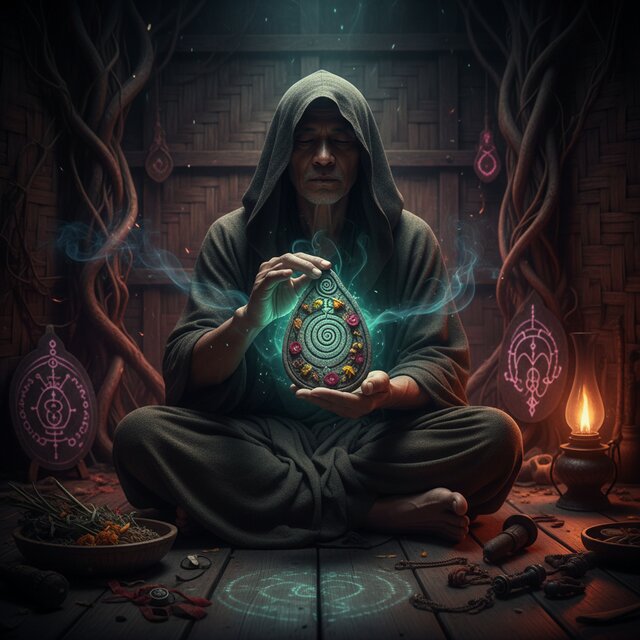
A mysterious Thai Arjan master in the shadows chanting ancient Khom spells over a glowing herbal clay amulet
In the shadows of the border provinces, the old ways persist among masters who claim to know the bone-binding chants.

One must ask: is this “black magic”? In the Thai-Khmer tradition, magic is rarely viewed in binary terms of “good” vs. “evil.” Instead, it is viewed in terms of merit and consequence.

The masters who create these amulets often emphasize that the spirit bound within is a “partner” in merit-making. By helping the owner, the spirit gains merit, allowing it to eventually move toward a better rebirth. However, the “dark” reputation remains. The extraction of Naman Prai is now illegal and socially stigmatized, leading to a shift toward “synthetic” or “herbal” substitutes that claim to mimic the vibrational frequency of the original Khmer necromancy.

Yet, in the shadows of the border provinces, the old ways persist. There are still Arjans who claim to know the “True Name” of the wind and the “Bone-Binding” chants that haven’t changed since the reign of Jayavarman VII.

Conclusion: The Persistence of the Primordial
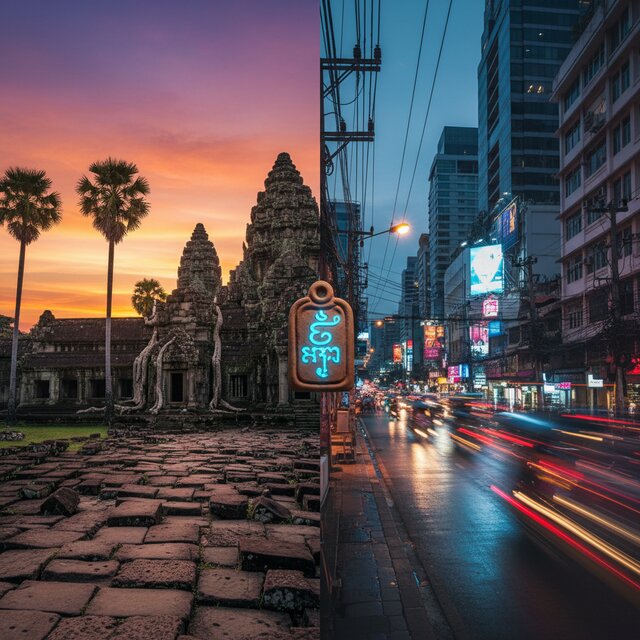
Cinematic double exposure blending ancient stone ruins of Angkor Wat with glowing neon streets of modern Bangkok
The Khmer Empire evolved from a kingdom of stone into a kingdom of spirit, housed within the Thai amulet.

The Khmer Empire did not die; it simply changed state. It evolved from a kingdom of stone into a kingdom of spirit, housed within the clay and bone of the Thai amulet.

By deconstructing these rituals, we see that the “metaphysical bridge” is built on a foundation of human psychology and ancient biology. The obsession with ancestral magic and spirit binding is a testament to our refusal to accept the finality of death.

As the sun sets over the ruins of Angkor and the neon lights of Bangkok flicker to life, the Katha begins again. A practitioner whispers into a small, carved piece of history, and somewhere in the unseen world, something wakes up. The Khmer necromantic blueprint is not a relic of the past; it is a living, breathing, and highly effective technology of the present. The ancient dead are still here, and they are open for business.

Epilogue: The Ritual Continues
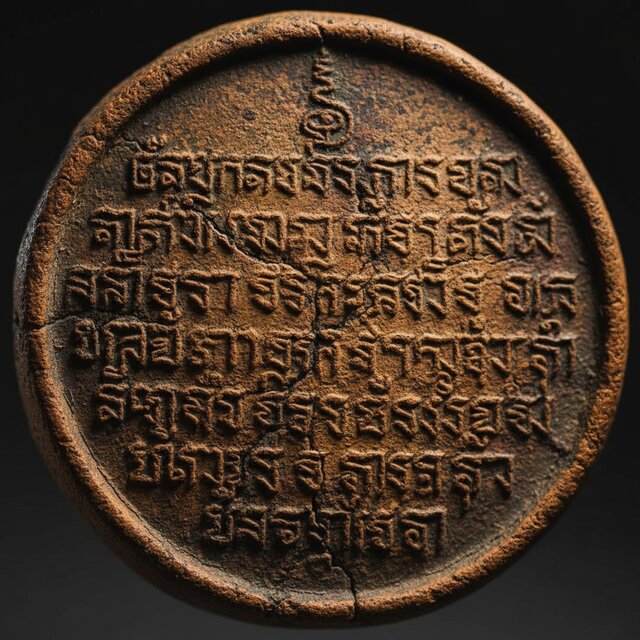
Extreme macro close-up of the back of a traditional Thai clay amulet showing intricate ancient Khom script deeply etched
Look closely at the Khom characters etched into the sacred mass. You are looking at a fragment of a lost empire.

The next time you see a Thai amulet, look closer. Notice the Khom characters etched into the back. Smell the faint, earthy scent of the “sacred mass.” You are not looking at a charm. You are looking at a fragment of a lost empire, a piece of sophisticated metaphysical “hardware” that has survived the fall of kings, the rise of nations, and the arrival of the internet. The bone-binders of Angkor are still at work, and the “Breath of Life” is as potent today as it was a thousand years ago.

Written by Ajarn Spencer Littlewood
thailandamulet.net
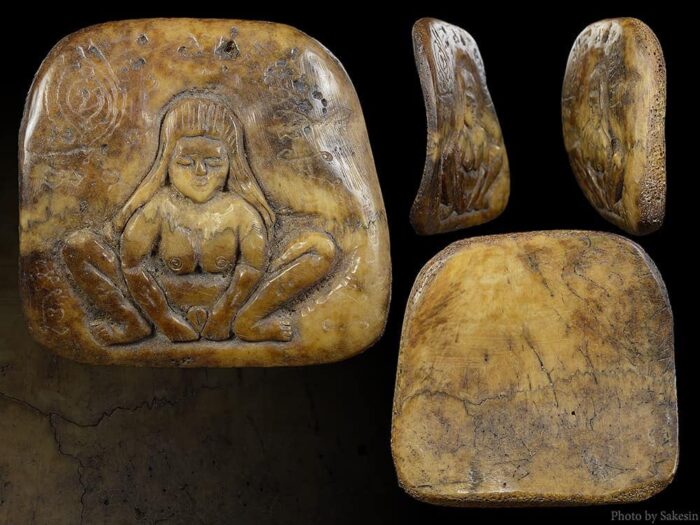
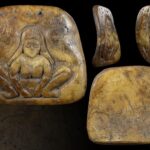
Mae Bper Aathan bone carving

The Thai Lanna culture and the tribes who belong to it, is a rich and ancient culture whose origins are lost in the ancient past, whose roots are  woven from the traditions, beliefs, and practices of the diverse ethnic groups that have inhabited the northern region of Thailand for centuries. Originating from the ancient kingdom of Lanna, which flourished from the 13th to the 18th century, this culture is characterized by its unique blend of indigenous animist beliefs, Buddhist spirituality, and influences from neighboring cultures such as Burma, China, and Laos.

Origins of Thai Lanna Culture

The roots of Thai Lanna culture can be traced back to the establishment of the Lanna kingdom in the 13th century by King Mengrai. This kingdom, centered in the city of Chiang Mai, flourished as a major center of trade and culture in Southeast Asia. Under the patronage of the Lanna rulers, the region experienced a golden age of art, literature, and religious scholarship. This pivotal moment in history marked the beginning of a flourishing era for the northern region of Thailand, with Chiang Mai emerging as the heart of this vibrant kingdom.

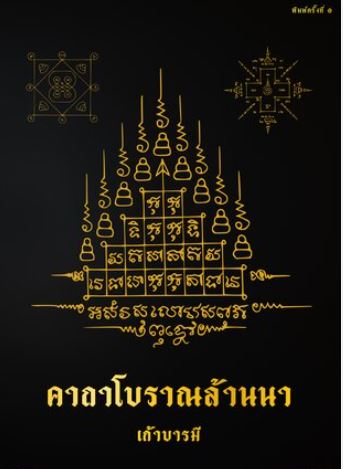
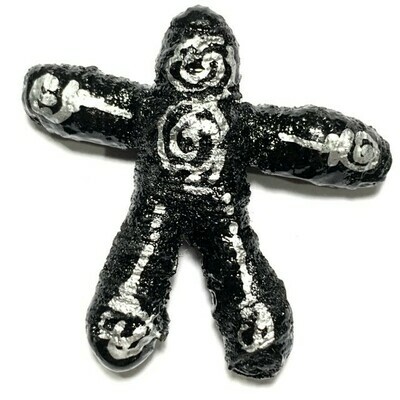
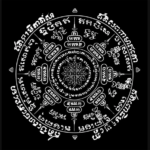
Yant with Kata Boran Lanna

Yant with Kata Boran (Sacred Geometry Spell with Ancient Inscriptions of Incantations) of the Lanna Lineage (however, this exhibit uses Khom Khmer Script, Not Tai Yai Lanna)

King Mengrai’s vision and leadership laid the foundation for a society that thrived on both economic prosperity and cultural richness. With its strategic location at the crossroads of major trade routes, Chiang Mai became a bustling hub of commerce, facilitating the exchange of goods and ideas across Southeast Asia.

Under the patronage of the Lanna rulers, the region experienced a renaissance of sorts, witnessing unprecedented growth in art, literature, and religious scholarship. Artists and artisans flourished, creating masterpieces of architecture, sculpture, and painting that still stand as testaments to the kingdom’s creative brilliance.

Literature also flourished during this golden age, with poets and writers producing works that celebrated the beauty of Lanna culture and explored profound spiritual themes. Religious scholarship thrived as well, with Buddhist monasteries serving as centers of learning and enlightenment, attracting scholars and practitioners from far and wide.

The Lanna rulers’ patronage of the arts and culture not only elevated the kingdom’s prestige but also fostered a sense of unity and pride among its people. The vibrant tapestry of Lanna culture, with its unique blend of indigenous traditions, Buddhist spirituality, and influences from neighboring regions, became a source of identity and inspiration for generations to come.

So in part, the most important documented origins of Thai Lanna culture are rooted in the vision and legacy of King Mengrai and the Lanna rulers who followed, whose patronage and support cultivated an environment where creativity, intellect, and spirituality could flourish, leaving an indelible mark on the history and heritage of northern Thailand.

Animist Beliefs in Thailand

Animism forms the bedrock of traditional Thai beliefs, predating the arrival of Buddhism in the region. Animism holds that spirits inhabit every aspect of the natural world, from trees and rivers to mountains and ancestral homes. These spirits, known as phi, are believed to influence daily life and must be appeased through rituals and offerings to ensure harmony and prosperity.

Magical, Spiritual, and Superstitious Beliefs

Magic and spirituality play a prominent role in Thai Lanna culture, intertwining with animist beliefs to create a complex tapestry of supernatural practices. Rituals and ceremonies are conducted to invoke the protection of ancestral spirits, seek guidance from divine entities, and harness the forces of nature for healing and prosperity.

Religious Beliefs of the Northern Hilltribe People

The northern hilltribe people, consisting of diverse ethnic groups such as the Karen, Hmong, Akha, and Lisu, have their own unique religious beliefs and practices that are deeply rooted in animism and shamanism. While many have adopted elements of Buddhism introduced by Thai rulers, their indigenous spiritual traditions continue to shape their worldview and way of life.

Intertwinement with Occult Practices

The northern hilltribe people have a long-standing tradition of engaging in occult practices, including divination, spirit possession, and the use of magical charms and amulets. These practices are often passed down through oral tradition and are central to their cultural identity and sense of community. The Thai Lanna culture shows the enduring resilience and adaptability of deep and mysterious, and ancient of beliefs the people who have inhabited the northern region of Thailand for centuries. Rooted in animism, infused with Buddhist spirituality, and enriched by diverse cultural influences, it continues to evolve and thrive in the modern world while preserving the rich tapestry of traditions that define it.

The Lanna culture of Thailand, a thriving amalgamation of indigenous customs, spiritual values, and external influences, is deeply entrenched in the northern regions of Thailand. This culture traces its origins to the historic Lanna kingdom, which prospered from the 13th to the 18th century, with Chiang Mai as its cultural and commercial hub. The Lanna kingdom’s patronage fostered a golden age of artistic, literary, and religious scholarship.

The Thai Lanna community, and in particular, the Hilltribe Peoples, follow Animism, a belief system that predates Buddhism and has significantly influenced traditional Thai religious practices. Animism posits that spirits reside in all natural elements, including rivers, trees, and ancestral homes. These spirits, known as phi, are believed to have a profound impact on daily life and are said to require regular rituals and offerings to ensure harmony and prosperity. By appeasing these spirits, the Hilltribe Peoples aim to maintain a balanced relationship with their environment and ancestors.

Magic and spirituality are integral to Thai Lanna culture, intertwining with animism to create a complex web of supernatural practices. Ceremonies and rituals are performed to solicit the protection of ancestral spirits, seek counsel from divine entities, and harness the natural elements for healing and prosperity.

The religious practices of the ethnic groups residing in the northern hilltribes, including the Karen, Hmong, Akha, and Lisu, are a fascinating reflection of their cultural identity. These practices are characterized by a unique blend of animism, shamanism, and Buddhism, each of which plays a significant role in shaping the worldview and lifestyle of these communities. Despite the adoption of Buddhist elements, the indigenous spiritual traditions of these groups continue to hold immense importance. These traditions have been carefully preserved and passed down through generations, serving as the foundation for the hilltribe people’s understanding of the world and their place in it. The continuation of these traditions is revelatory of the resilience and adaptability of these communities, as they find ways to maintain their cultural heritage while also incorporating external influences.

The hilltribe people have a rich tradition of engaging in occult practices, including divination, spirit possession, and the use of magical charms and amulets. These practices, often orally transmitted, are central to their cultural identity and community cohesion.

The Lanna culture of Thailand is a thriving amalgamation of indigenous customs, spiritual values, and external influences, deeply entrenched in the northern regions of the country. This culture traces its origins back to the historic Lanna kingdom, which flourished from the 13th to the 18th century, with Chiang Mai serving as its cultural and commercial hub. The Lanna kingdom’s patronage fostered a golden age of artistic, literary, and religious scholarship, making significant contributions to the rich cultural tapestry of Thailand. At the heart of traditional Thai beliefs lies Animism, an indigenous belief system that predates Buddhism. This philosophy posits that spirits reside in all elements of the natural world, from rivers and trees to ancestral homes.

These spirits, known as phi, are believed to impact daily life and must be propitiated through rituals and offerings to ensure harmony and prosperity. Magic and spirituality are integral to Thai Lanna culture, intertwining with animism to create a complex web of supernatural practices. Ceremonies and rituals in Lanna culture serve multiple purposes. They are performed to solicit the protection of ancestral spirits, seek counsel from divine entities, and harness the natural elements for healing and prosperity. The religious practices of the northern hilltribe people, encompassing ethnic groups such as the Karen, Hmong, Akha, and Lisu, are characterized by their unique blend of animism, shamanism, and Buddhism. Despite the adoption of Buddhist elements, their indigenous spiritual traditions continue to shape their worldview and lifestyle.

The hilltribe people have a rich tradition of engaging in occult practices, including divination, spirit possession, and the use of magical charms and amulets. These practices, often orally transmitted, are central to their cultural identity and community cohesion. They are not merely superstitions but are deeply intertwined with their daily lives, guiding their decisions and actions in a deeply spiritual and interconnected world.

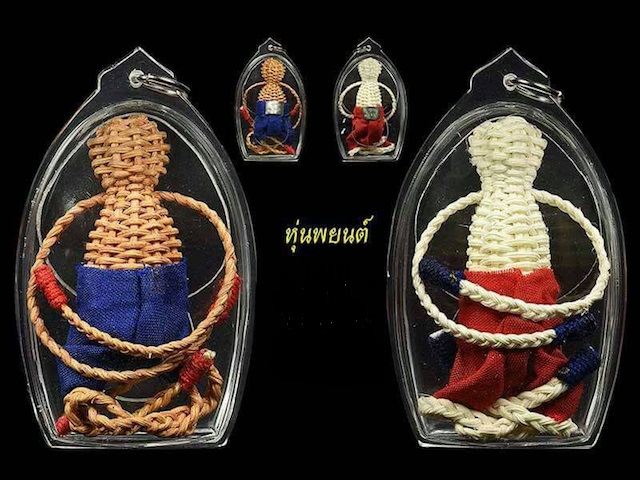
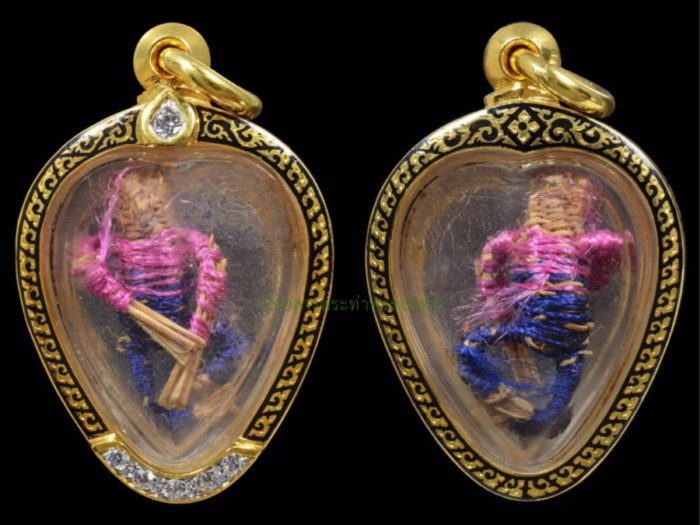
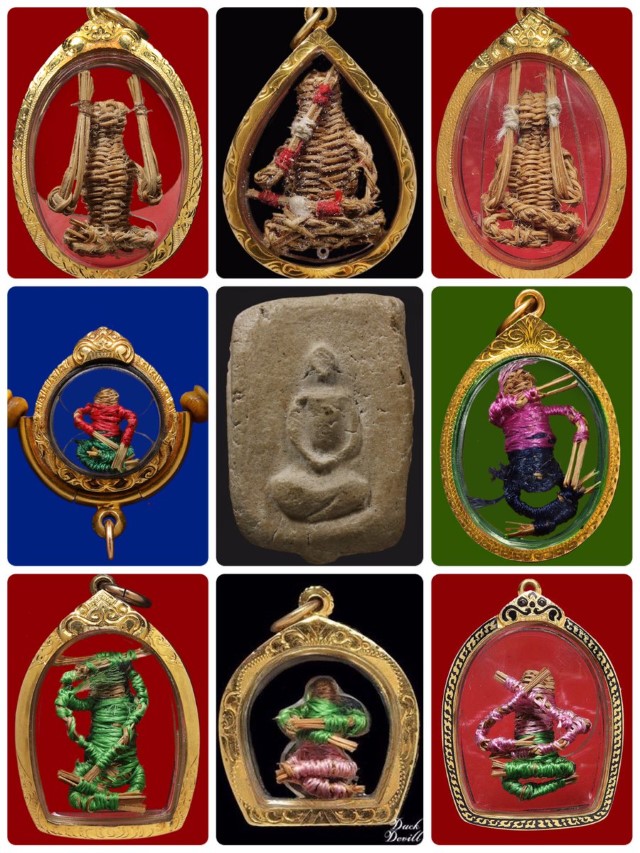
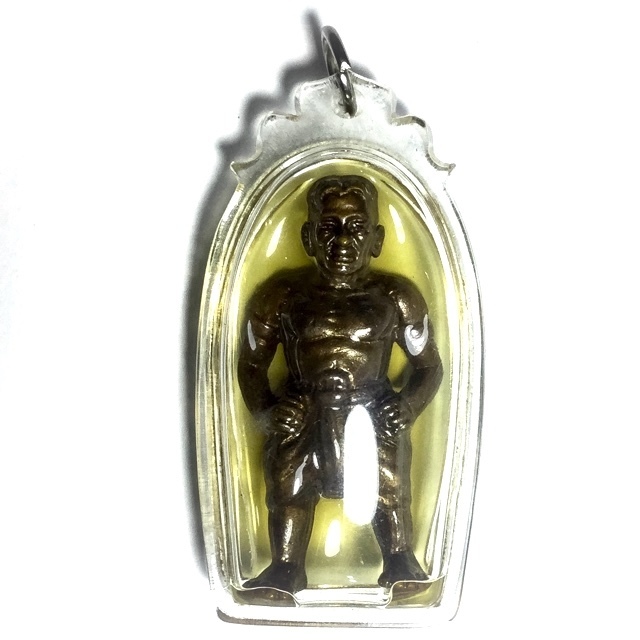
The Hoon Payont (or ‘Hun Payont’), is an ancient reanimated Golem effigy, with far back reaching roots. Its name comes from the word ‘Payont’ which means an effigy that has been brought to life by Sorcerous Magick. Hoon Payont may be made in various forms, such as the form of a Human, or some other Magickal creature, or animal, depending on the needs of the user, and the intended uses of the Adept who makes them.

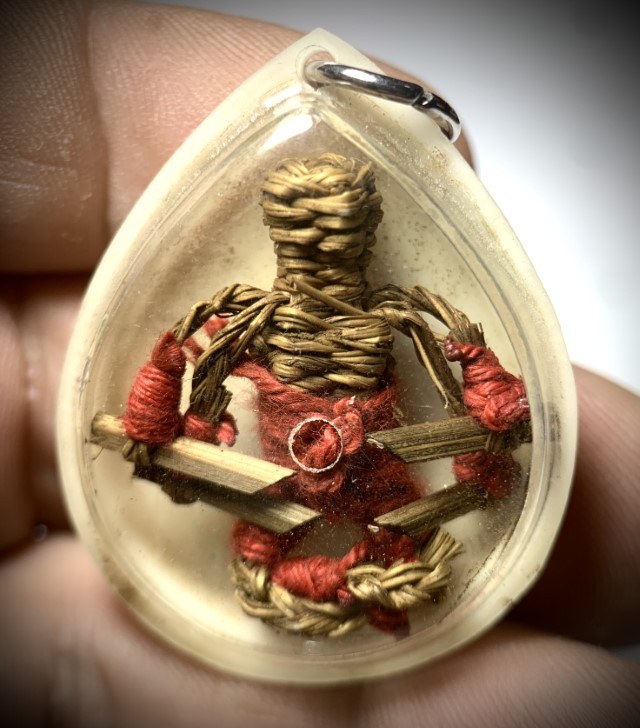
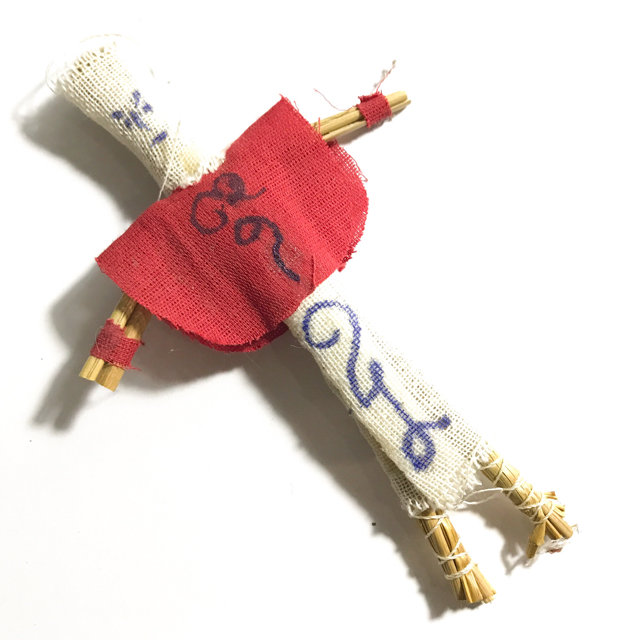
Below; The World Famous Hun Payont Hyaa Ka Mad Daay Daeng Akom of Ajarn Loi Po Ngern (Ayuttaya Master and direct lineage continuance of the Wicha of Luang Por Glan of Wat Prayatigaram (Ayuttaya).

Hun Payont Hyaa Ka Mad Daay Daeng Akom Ajarn Loi Po Ngern

Hoon Payont spirit assistants, work as a kind of invisible guardian and valet, who cares for your safety and well being, protecting and nourishing. He can be used to complete and fulfill missions and tasks which are beyond your own abilities, in exchange for your making and sharing of merits with the hun payont.

Hoon Payont are made from various substances, such as the Hoon Hyaa Saan (Hay/Straw), Hoon Gan Bai Mai an (leaves), Hoon Thao Wan (magical vines), Hoon Dtakua (mercurial lead), Hoon Khee Pheung (wax), Bai Mai Ta (leaves), Hoon Gae Salak (carved wood), Hoon Daay (cord wrap), Hoon Pha (cloth bound), Hoon Din (molded clay), Hoon Din Phao (baked clay), Hoon Hin (carved stone), Hoon Krabueang (ceramic), Hoon Poon (cement), Hoon Ngern/Tong (silver or gold), Hoon Loha (Iron)


The Hoon Payont, is an amulet that is found to date back to the times of the Kassapa Buddha. The Kassapa Buddha, is said to have made a Payont effigy, to protect his Relics, before he himself passed into Nibbana. The Wicha Hun Payont Requires one to perform occasional Buddhist Prayers and give alms, and perform the ‘Gruad Nam’ Water Pouring Ceremony to share merits with the Hoon Payont.

YouTube player

200 Years Later, King Asoka opened a shrine, to remove and preserve the relics, but the shrine was inhabited by a Hoon Payont. King Asoka was forced to invoke and summon the God Indra, who manifested as a Brahman, and performed Incantations, enabling King Asoka to enter and remove the Saririkadhatu Relics.

In the world of Sorcery, all lineages believe in the existence of different kinds of spirits, which can be imbued within effigies or controlled, or beseeched to perform a multitude of tasks.

There are many Animist and Necromantic amulets which use different types of spirits which are Hoeng Prai Ghosts, Devas, Bhuta, Kumarn Tong, Rak Yom, In Jantr, Phu Some, In Gaew, Mae Takian, Ma Hoeng Prai, and many others such as Yaksa Monsters, to inhabit an effigy.

The Hoon Payon amulets of Ajahn Loi

Great Adepts are the only ones able to create Hoon Payont Golem Effigies, which are then brought to life with Necromancy and imbued with any of a number of kinds of spirits.

All Hoon Payont Golems, must be empowered by an Adept, who has Mastered the Wicha Akarn Sam Sip Sorng; 32 invocations of the 32 elements within a living being, to make the effigy able to displace itself (move around), and to emit Magical powers, protecting wealth and possessions within its enclave.

If intruders enter, the Hoon Payont will create illusions that drive the thieves away, and will also scare away all kinds of demons and ghosts that enter the household to cause any havoc. Hoon Payont are very protective of the belonging within the home and for this reason excellent guards.

The Hoon Payont is used by those who believe, in the household, place of business, and even carried as an amulet or placed in one’s vehicle, to keep away alll dangers and inauspicious events and malicious entities

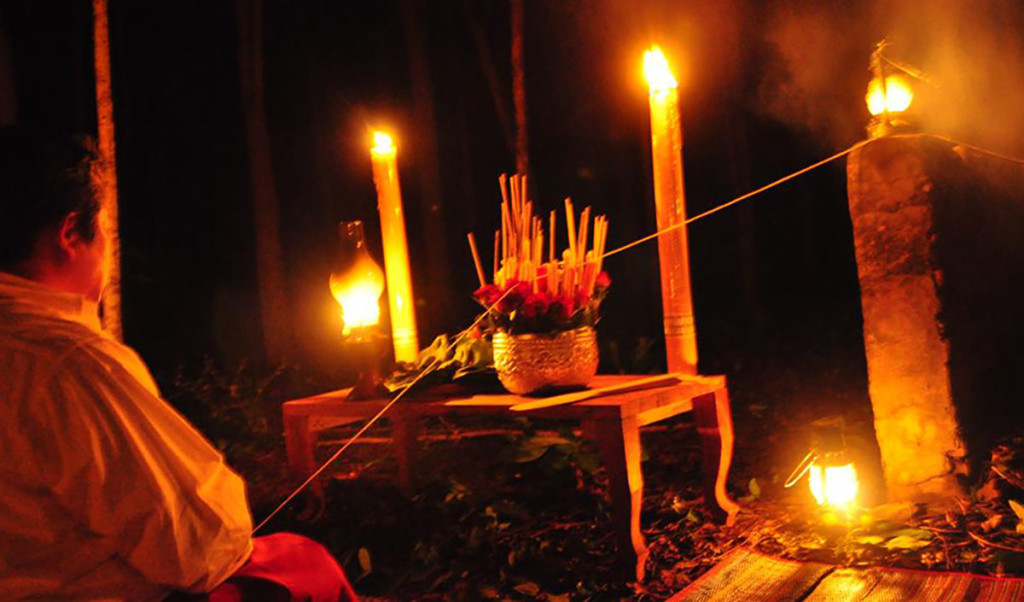
Hoon Payont should be rewarded or appeased through Bucha with the Piti Gruad Nam Water Pouring Ceremony, in the same way as seen by Thai Buddhists after giving alms to the Monks, except that it is you who makes the prayer.

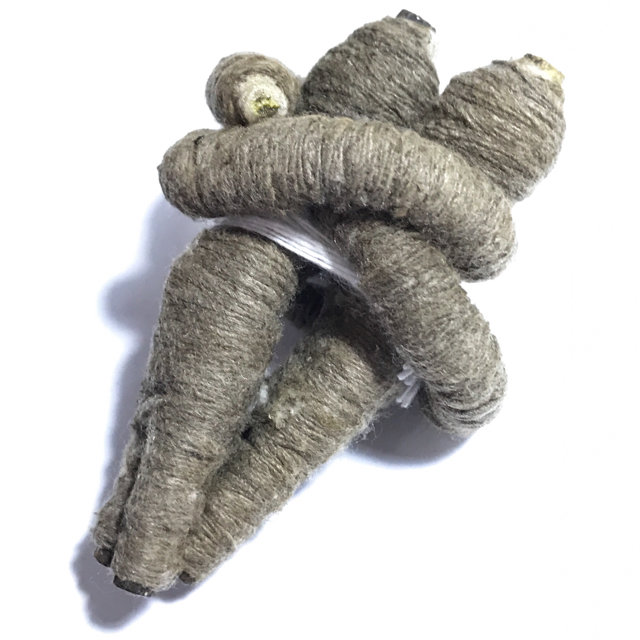
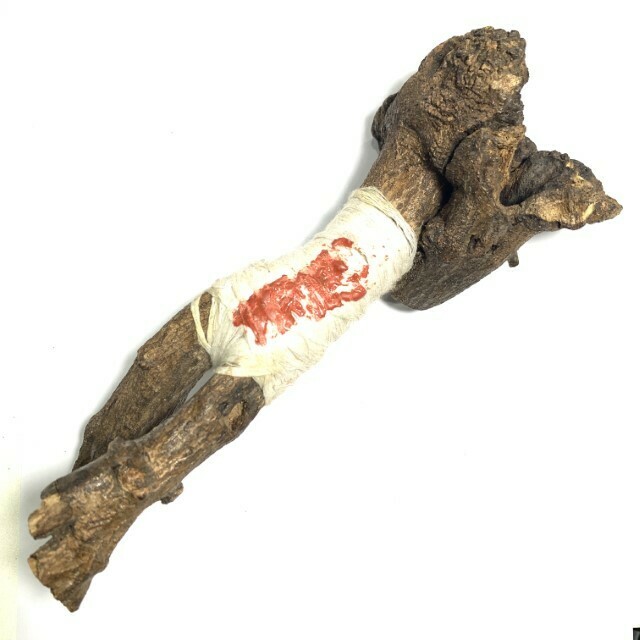
Below; Hun Payont Mai Ga Fak Rak Sacred Deva Inhabited treewood effigy (Natural Formation) – Por Tan Kloi, Wat Phu Khao Tong

Hun Payont Mai Ga Fak Rak Sacred Deva Inhabited treewood effigy (Natural Formation) - Por Tan Kloi, Wat Phu Khao Tong

Alternatively, one can also use sacred or aromatic oils for consecration, or even liquor if wish to use for powerful Magic for Gambling and other matters of high risk, by putting a few drops of liquor on the Hun Payont, or offering a glass in symbolic fashion on its altar if not worn as an amulet, and kept in the house.

Below; Huan Payont Loi Ongk Statuette in Nam Man Prai

Huan Payont Loi Ongk Statuette in Nam Man Prai

YouTube player

There are in truth a multitude of different Payont Golems, but there are officially Nine types of empowerment for the Wicha Hoon Payont, which are known to exist within the Kampir Saiyawaet Grimoires;

  1. Wicha Payont Kaa Khaay (assist in increasing sales)
  2. Wicha Payont Kong Grapan (protect from sharp instruments and bullets(
  3. Wicha Payont Maha Niyom (popularity, positive influence – great preference)
  4. Wicha Payont Maha Ud (gunstopper power)
  5. Wicha Payont Maha Sanaeh (charm, attraction, promotion, increase sales)
  6. Wicha Payont Fao Ruean Fao Rot (guard over the home or the car/vehicle)
  7. Wicha Payont Chai Ngaan (send on missions or to complete tasks)
  8. Wicha Payont Kumarn Tong (Kumarn Tong as Hun Payont)
  9. Wicha Payont Ko Taen Jao Khong Hnun Duang (take the brunt of your karma for you and increase your positive alignments)

Hoon Payon Ya Ka Long Rak

Kata Bucha Hoon Payont Chanting and Worship Methods

YouTube player