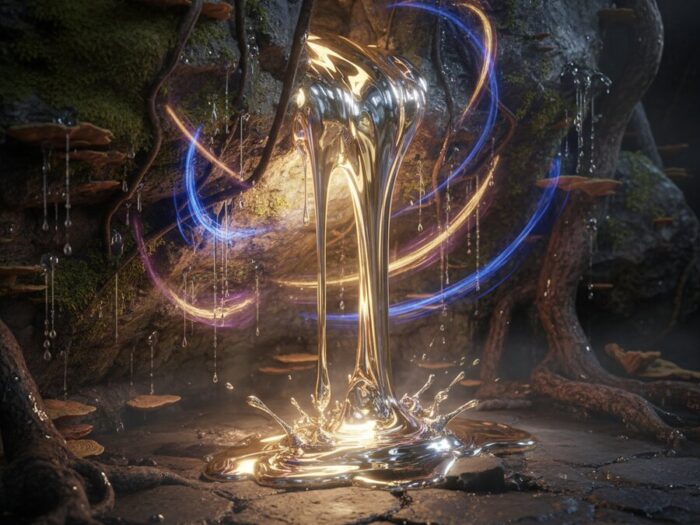
Glowing metallic adamantine stone Lek Lai emerging from a damp cave wall

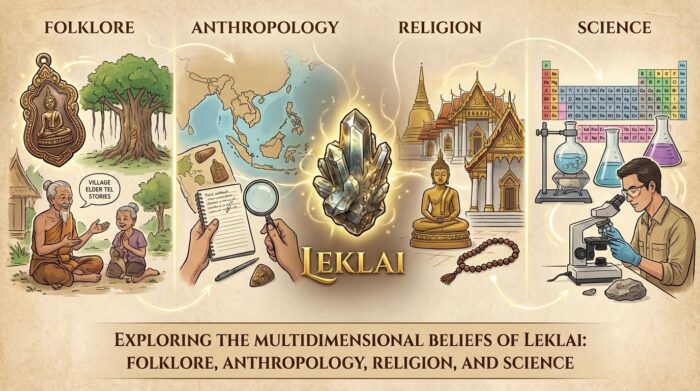
In Thailand’s Occult and Animist Traditional Belief system, which is deeply interwoven into Thai Buddhism, there exists a mystical substance that has captured the imagination of believers and seekers alike for centuries: Lek Lai (เหล็กไหล). This enigmatic material, often referred to as the “Sacred Kaya Siddhi Adamantine Substance,” is steeped in ancient legend and attributed with miraculous powers that defy rational scientific explanation.
Origins and Elemental Spirits

Lek Lai is known for its oily, metallic, and shiny surface that reflects light, displaying various colors and iridescences depending on its elemental class. It is believed to reside within the walls of cool, damp caves deep within impenetrable jungles. While Lek Lai can remain in a static, solid rock form, it also possesses the magical ability to slither, stretch, and move like a liquid snake, appearing and disappearing at will.
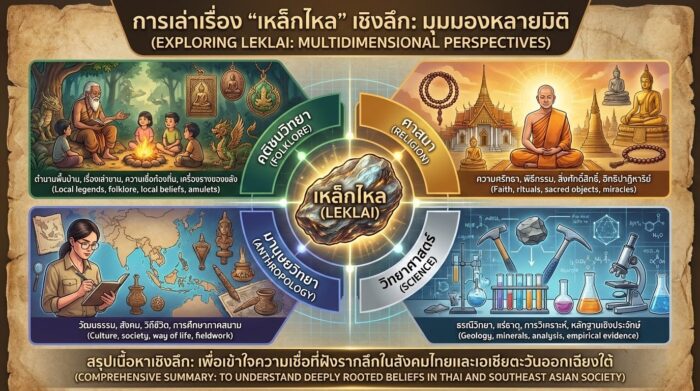
This mysterious substance is not simply a mineral; it is a living entity. Thai occultism dictates that Lek Lai contains the spirit or mind of a powerful Ruesi (Hermit Sage) or an elemental Deva (such as a Khon Tan or Gandharva). These elemental angels are driven to manifest in the physical realm to build merit (Baramee) by protecting the righteous.
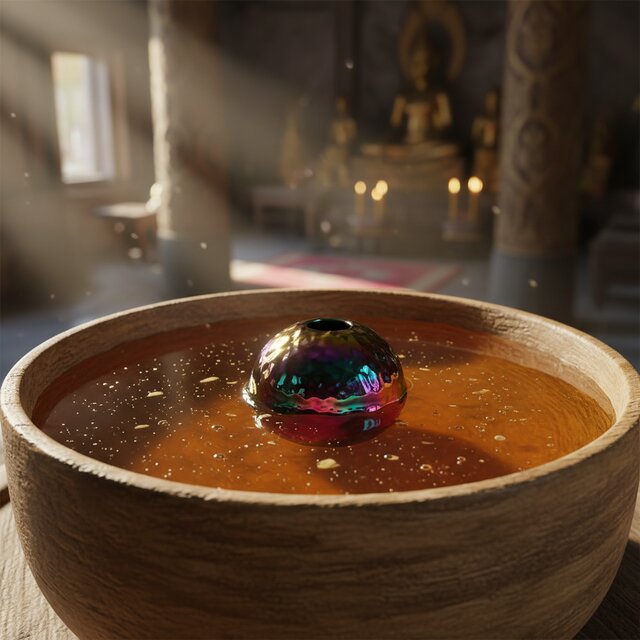
A beautiful, iridescent rainbow-colored metallic Lek Lai bead resting inside a small wooden bowl filled with wild forest honey
A piece of Rainbow Lek Lai (Lek Lai Jed See) being fed wild forest honey to appease the elemental spirit within.

The Miraculous Powers of Kaya Siddhi

The purported powers of Lek Lai are as diverse as they are awe-inspiring. Due to its high-frequency energy field, it is said to possess the ability to block energy fields, waves, and even render gunpowder damp and guns ineffective in its presence (Maha Ud). Lek Lai can transform hot boiling water into cold in an instant, emit a fragrant floral aroma, and heal illnesses or venomous stings when laid upon the affected area.
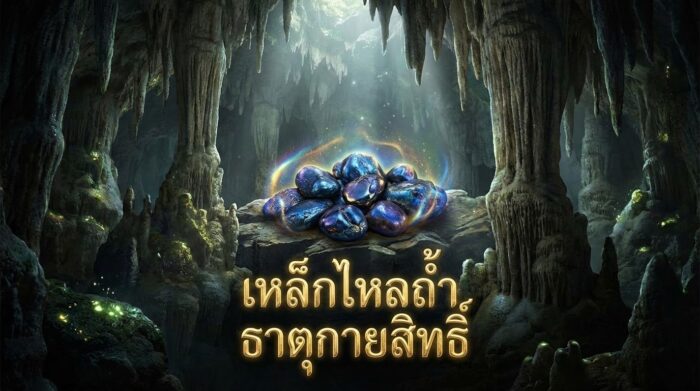
There are numerous classes of Lek Lai, such as Lek Lai Suriyan Racha (Sun King), Lek Lai Umaru, and Lek Lai Go Ti Pi (Million Year Old Lek Lai). Some magnetic forms are known to levitate or attract each other across distances, displaying properties that traditional physics struggles to classify.

The Ritual of Extraction (Dtat Yen vs Dtat Rorn)

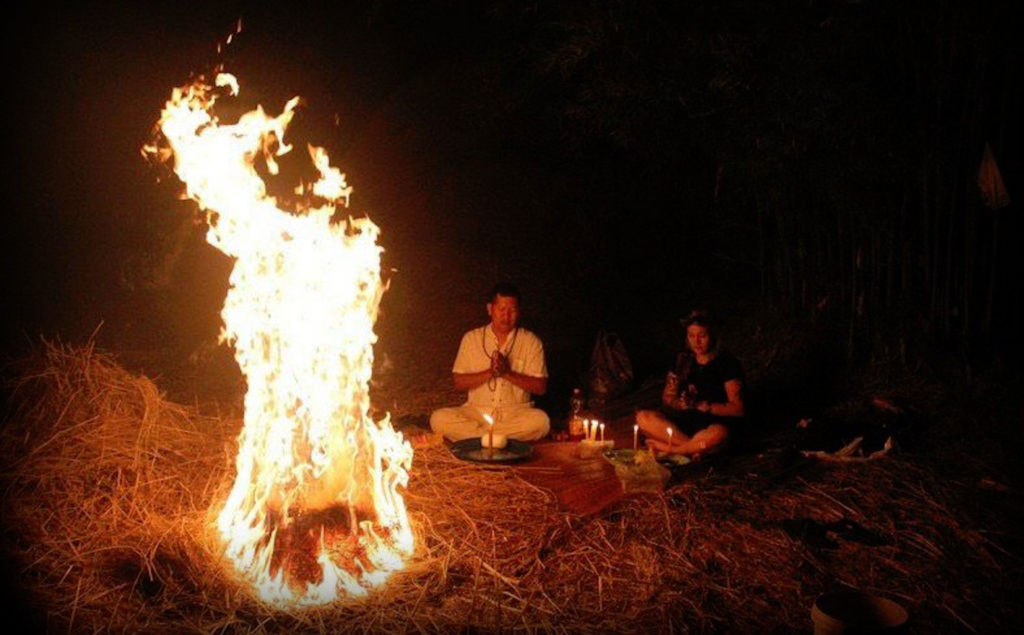
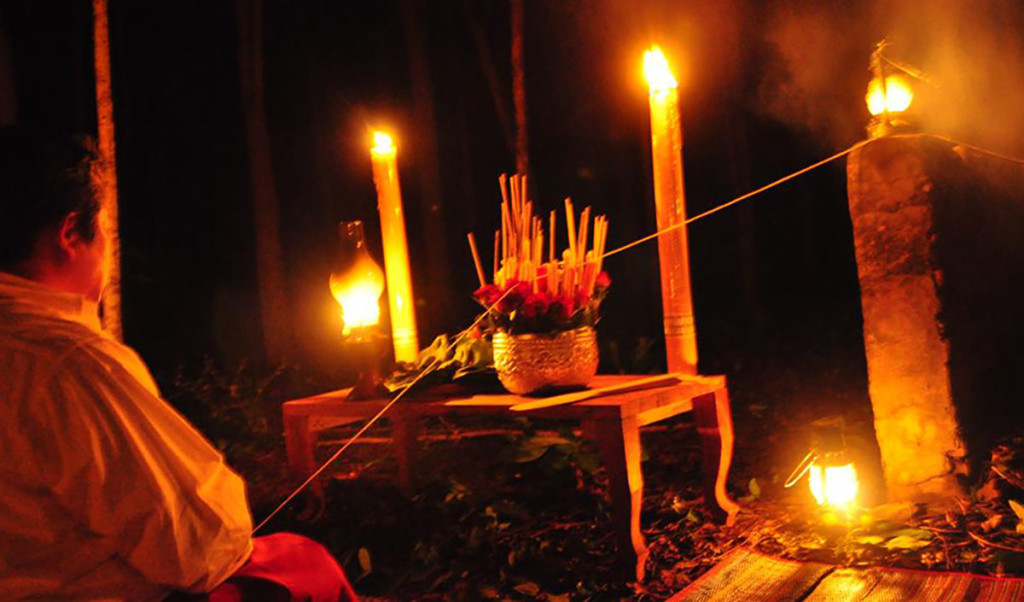
The extraction of Lek Lai is an incredibly dangerous and ritualistic process, strictly performed by advanced practitioners known as Kroo Ba Ajarn. The spirit within the cave must be invoked and fed pure wild honey (Kina Nam Peung) to coax the adamantine substance out from the rock face.
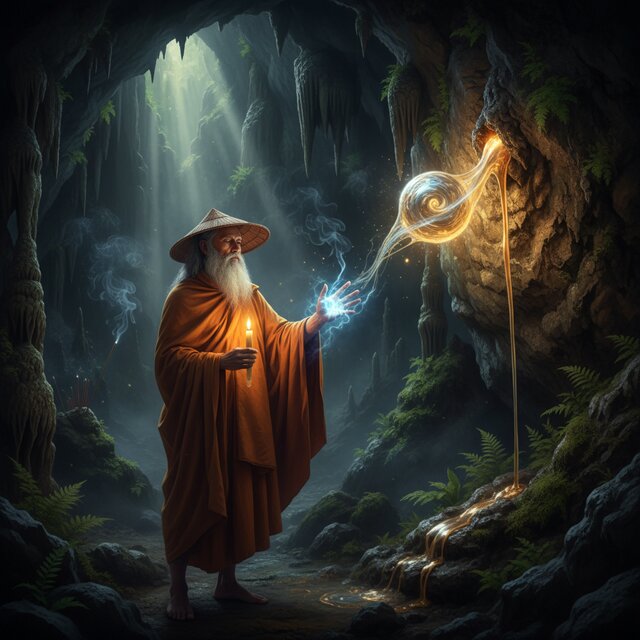
A traditional Thai forest monk or Ruesi master holding a single beeswax candle up to a dark cave wall, magically extracting Lek Lai
The Dtat Yen (Cold Cutting) method uses only the flame of a single beeswax candle and the psychic power of a master to coax the Lek Lai.

There are two primary methods of extraction: Dtat Yen (cold cutting) and Dtat Rorn (hot flame). In the incredibly rare and highly prized Dtat Yen method, the Lek Lai is coaxed out using pure psychic power and the invocation of the Ruesi. The master “cuts” the liquid metal ceremonially using only a weak candle flame or a strand of a virgin’s hair. This yields perfect, smooth Lek Lai beads resembling pearls, which harden instantly upon dropping into a bowl of honey.

Alternatively, the Dtat Rorn method involves heating the stone nest containing Lek Lai with a blazing hot flame or torch to melt the substance out. This method produces Lek Lai with flatter, more jagged surfaces due to the molten substance falling onto a waiting steel tray. While still powerful, Dtat Rorn Lek Lai is considered less ritually pure than its Dtat Yen counterpart.

Cultural Significance and Karma

Ajarn Spencer Littlewood, a respected figure in the realm of Thai amulets, has continuously stressed the need for compassion and profound respect when handling Lek Lai. It is not merely a bulletproof vest; it is a sentient spiritual companion. If the wearer breaks the Five Precepts (Sin Haa), the Lek Lai may simply vanish, slipping away into the earth to return to its cave.

Written by Ajarn Spencer Littlewood
buddhamagic.net
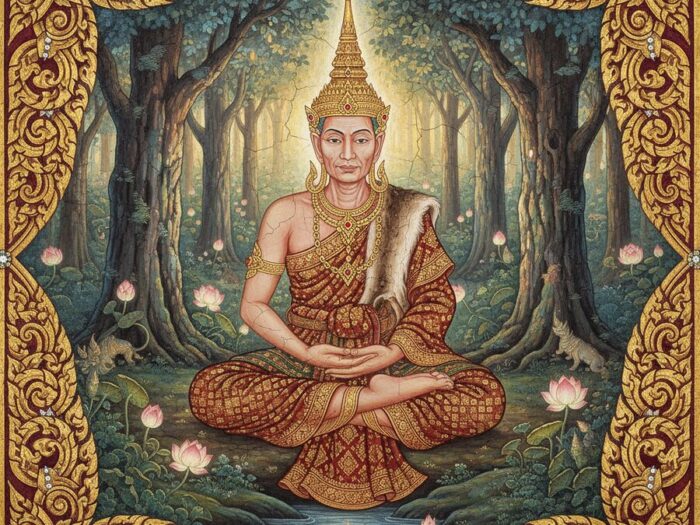
A traditional authentic Thai Buddhist temple mural wall painting of a powerful Ruesi Lersi hermit sage wearing a golden Chada crown, sitting in deep meditation in a mystical forest, framed by intricate golden Lai Thai Kranok patterned borders

The Lersi (ฤาษี), also spelled Ruesi, hold a profound and foundational place within Thai folklore, animism, and occult practices. These revered hermit sages are regarded as enlightened beings who have attained mastery over various esoteric arts, including meditation, herbal medicine, magic, and alchemy. The term “Lersi” originates from the Sanskrit word “Rishi,” which translates to a seer, sage, or inspired poet of the Vedic traditions.

Origins and the Vedic Connection

To understand the Ruesi in the context of Thai Buddhism, one must look back to the spiritual migrations from the Indian subcontinent. In Thai mythology, the Lersi are often believed to predate the historical Buddha, Siddhartha Gautama, or to have been his most advanced contemporaries and disciples. According to legendary chronicles, the Buddha himself was taught the highest forms of meditative absorption (Jhana) by hermit sages before finding the Middle Way.

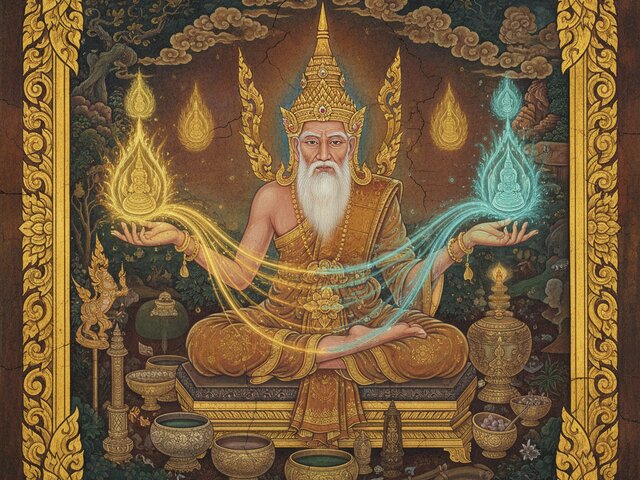
A traditional Thai Buddhist temple mural of a Ruesi Lersi hermit sage wearing a golden Chada crown, magically creating sacred amulets with glowing energy, framed by Lai Thai Kranok borders
Lersi sages are revered as the original masters of Wicha (magic) and the creators of powerful metaphysical amulets.

Following the Buddha’s enlightenment, it is said that he taught his most advanced disciples the deepest secrets of spiritual practice. These disciples retreated to the dense forests and high mountains to lead lives of extreme asceticism. By detaching completely from worldly desires, they cultivated supernatural powers (Abhinna), enabling them to perform miraculous feats and communicate with celestial beings.

The Anatomy of a Lersi

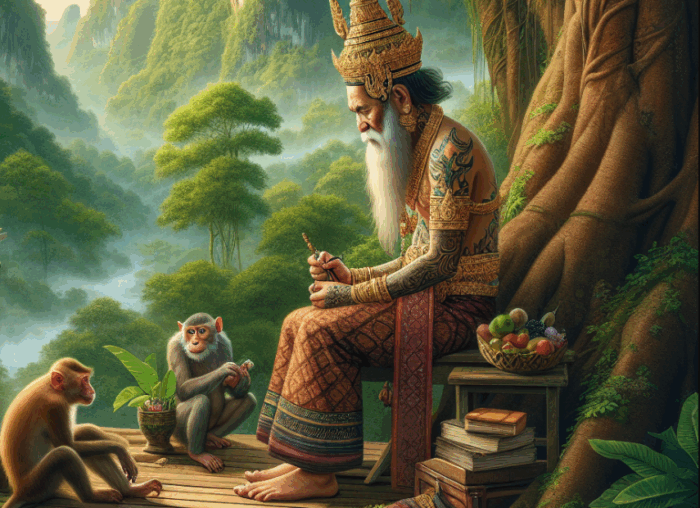
In authentic Thai Buddhist art and temple murals, the Lersi are highly stylized. They are almost universally depicted as ascetic hermits with long flowing white beards, unkempt hair, and wearing the distinctive tiger-skin loincloths—a symbol of their mastery over the wild and their ability to tame the inner “beast” of human defilement.

Crucially, higher-tier Lersi are portrayed wearing the Chada (ชฎา), the tall, ornate, spire-like golden crown. This headpiece represents their elevated spiritual status and connection to the heavenly realms. They are frequently depicted holding symbolic ritual objects: a wooden staff to ward off evil spirits, a rosary (Mala) for reciting Kathas (incantations), a begging bowl, or an alchemical mortar for grinding sacred medicinal herbs.

The 108 Ruesi of Legend

Thai esoteric tradition speaks of the “108 Ruesi” (108 being a sacred, infinite number in Dharmic traditions). This collective represents a vast pantheon of masters, each embodying a specific spectrum of esoteric knowledge. Among the most prominent are:

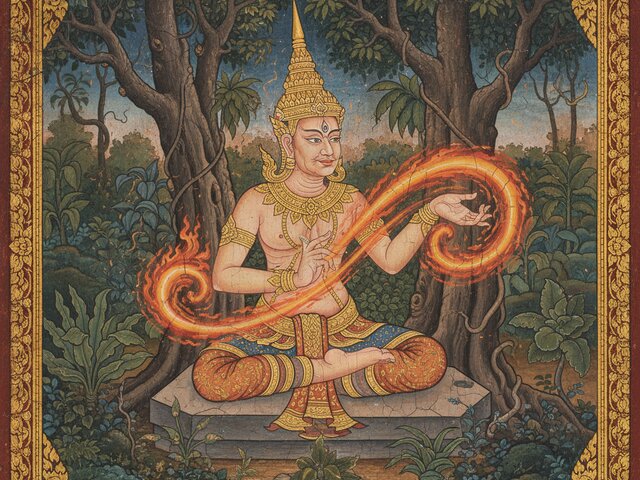
A traditional Thai Buddhist temple mural of Ruesi Tafai with a third eye and a golden Chada crown, manipulating fire magic, framed by Lai Thai Kranok borders
Ruesi Tafai (Gabin Muni), the fiery sage with a third eye, known for his destructive and purifying fire magic.

Ruesi Narot: Often considered the primary teacher and grandfather of the magical arts, representing foundational wisdom and musical knowledge.

Ruesi Tafai (Gabin Muni): The famous “Fire-Eyed Hermit.” He is depicted with a third eye on his forehead. It is said that if he opens this eye, it unleashes a purifying fire capable of destroying all enemies and black magic. He is heavily revered for protection and combat magic.

Ruesi Petchalugan: The patron sage of engineering, mechanics, and sacred architecture.

The Origins of Sak Yant

One of the most vital contributions of the Lersi to modern Thai culture is their role as the originators of Sak Yant—the tradition of sacred geometric tattooing. Over two millennia ago, blending ancient Tai tribal animism with Khmer Empire sorcery, the Ruesi developed these intricate designs.

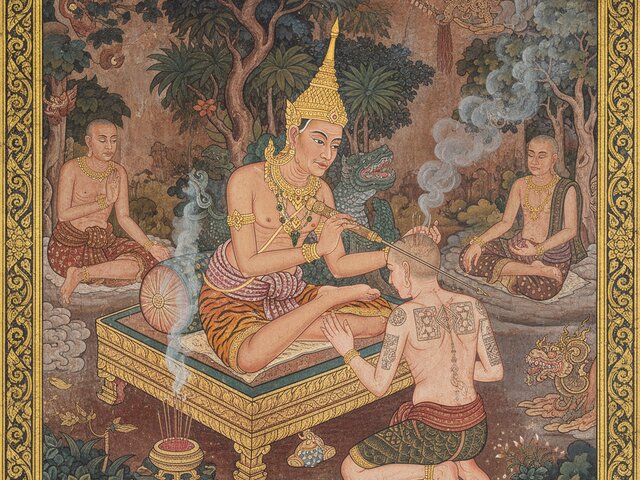
A traditional Thai Buddhist temple mural of a Ruesi Lersi master wearing a golden Chada crown performing a Sak Yant tattoo ceremony, framed by Lai Thai Kranok borders
The Lersi are the original lineage holders of the Sak Yant tradition, passing down sacred geometry through generations.

Using a traditional metal rod (Khem Sak), the master drives magical geometry, animal representations (like the Tiger or Hanuman), and ancient Khom script into the skin. These Yantras are accompanied by specific Pali incantations designed to bestow blessings of invulnerability (Kong Grapan), authority (Maha Amnaj), or prosperity. To receive a Sak Yant is to directly connect with the lineage of the Ruesi.

Naradha Rishi (Ruesi Narot)

Contemporary Reverence and the Wai Kroo

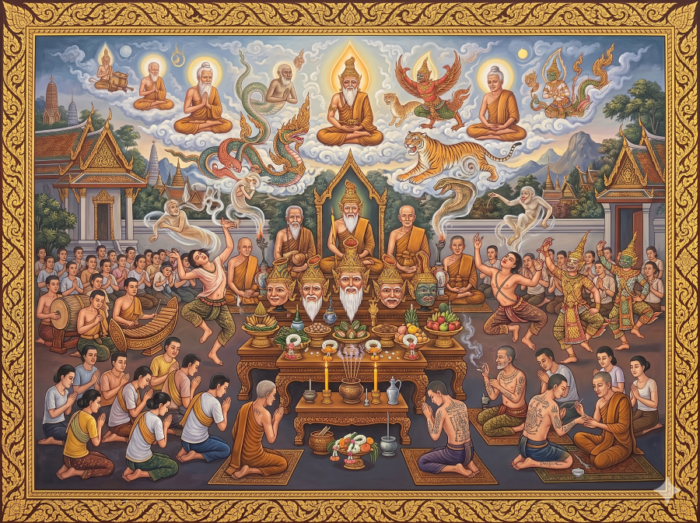
In modern Thai society, the reverence for the Lersi remains a powerful force. They are the patron deities of musicians, actors, astrologers, tattoo masters, and amulet makers. The most spectacular display of this devotion is the annual Wai Kroo (Master Day) ceremony.

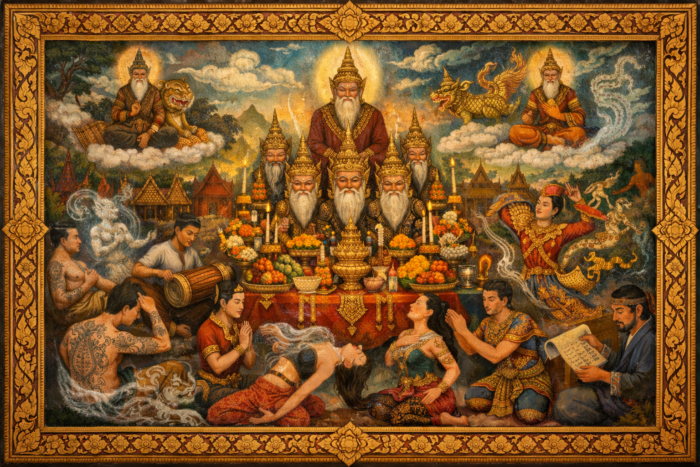
Wai Kroo Ruesi 108

During Wai Kroo, devotees gather to pay respects to the lineage of masters. Participants often enter deep trance states (Khong Kuen), manifesting the spirits of the Ruesi or the mythical animals tattooed upon their bodies. Offerings of betel nut, tobacco, fruits, and incense are given to intricately crafted Ruesi masks (Hua Khon) placed upon the central altar.

The Lersi occupy a unique and indispensable position bridging Thai Buddhism and the older, raw magic of the land. As enlightened beings and masters of esoteric knowledge, they embody the pursuit of spiritual excellence, magical prowess, and transcendental wisdom. Through devotion to the Lersi, practitioners seek not just protection, but a guiding hand on the journey toward ultimate liberation.

Written by Ajarn Spencer Littlewood
buddhamagic.net